About
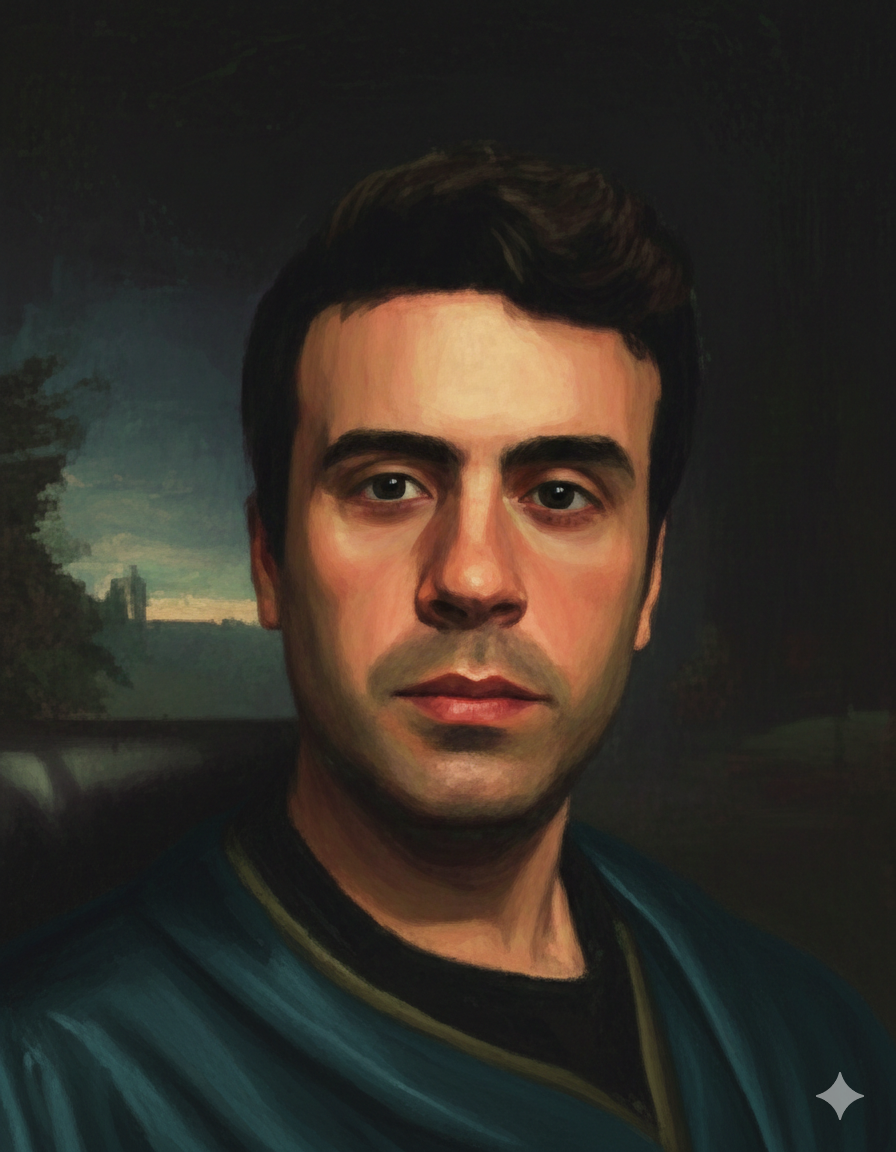
I hold a master's degree in computational biology from the University of Stuttgart and am currently seeking PhD or research positions that combine computational structural biology with machine learning. My training has focused on building quantitative, principled models for biological systems, with an emphasis on methodological clarity and reproducibility.
My current research focuses on model-based reinforcement learning and world models for protein engineering. I am developing BioDreamer, an open-source framework where JEPA-based world models learn latent simulators of biological systems and plan optimal interventions in imagination, with a primary focus on multi-step protein design through the ProteinDreamer module. Methodologically, I work with diffusion models, energy-based models, and physics-aware generative architectures for protein structure prediction and design. I am also interested in how principles from biological neural computation can inform the design of more interpretable artificial learning systems.
Research Interests
World Models & Model-Based RL
JEPA-based world models and Active Inference for planning multi-step biological interventions in learned latent spaces.
Protein Structure & Design
Generative models for protein structure prediction, fitness landscape navigation, and multi-step mutation planning.
Diffusion & Score-Based Models
Theory and application of denoising diffusion, score matching, and stochastic differential equations to generative modeling in biology.
Energy-Based & Physics-Aware Models
Energy-based models, Boltzmann distributions, and geometry-aware architectures that respect the physical constraints of biomolecular systems.
Molecular Dynamics
Learned latent-space simulators for molecular dynamics, replacing brute-force integration with amortized in-silico reasoning.
Neuroscience & Computation
Connections between biological neural computation and artificial learning systems, particularly through the lens of the Free Energy Principle.
Education
University of Stuttgart, Germany
University of Kurdistan, Iran
Projects
BioDreamer: World Models for Biological Design
Python · PyTorch · FastAPI · DockerAn open-source framework that applies JEPA-based world models and Active Inference to biological design across three scales: molecular dynamics (MolDreamer), protein fitness landscapes (ProteinDreamer), and gene regulatory network dynamics (CellDreamer). The core ProteinDreamer module learns a latent-space simulator and plans multi-step mutation trajectories in imagination before committing to expensive evaluations. Supports two world model backends, Latent Diffusion JEPA and Energy-Based JEPA, with a shared encoder, reward head, and policy interface.
CppNet: High-Performance Deep Learning in C++
C++ · Eigen · OpenMP · CUDAA C++17 deep learning library built from scratch with per-layer backend selection across Eigen (SIMD vectorization), OpenMP (CPU parallelism), and CUDA (GPU acceleration). Implements 41 CUDA kernels covering all layers, activations, losses, and optimizers, achieving up to 56x GPU speedup. Supports Linear, Conv2D, RNN, LSTM, GRU, Multi-Head Attention, BatchNorm, Dropout, Embedding, and Residual blocks with training utilities for scheduling, checkpointing, and early stopping.
TorchDiff: Diffusion Models in PyTorch
Python · PyTorchA modular PyTorch library implementing five diffusion model families: DDPM, DDIM, score-based SDE (VE, VP, sub-VP variants), Latent Diffusion, and unCLIP, with Kandinsky under active development. Supports conditional text-to-image synthesis and unconditional generation with configurable noise schedules and sampling strategies. Each model shares reusable components for noise prediction, text encoding, and evaluation metrics.
GRN-Designer: Automated Gene Regulatory Network Design
Python · Optimization · PDEsA hybrid optimization framework developed as part of my Master's thesis. Combines evolutionary algorithms with gradient-based refinement to automatically construct gene regulatory networks that reproduce target spatial expression patterns. Models spatial gene expression dynamics through PDE-based reaction-diffusion equations with heterogeneous initial conditions. Successfully generated GRNs for patterns of increasing complexity, from simple gradients to intricate shapes such as chromosome symbols and DNA strands.